
Overview
Lung cancer is the most common cancer in the world. It is the most malignant type, prone to metastasis, spreading from the lungs to the lymph nodes and other organs in the body. Lung cancer is divided into two types: small cell lung cancer and non-small cell lung cancer. They are diagnosed based on the appearance of the cells under a microscope. Non-small cell lung cancer is more common (accounting for about 85%) and includes the subtypes: squamous cell carcinoma, adenocarcinoma, and large cell carcinoma. Small cell lung cancer is less common (about 15%) and is considered the most dangerous form of lung cancer because it grows about twice as fast as other types and quickly metastasizes to distant sites (such as the brain).
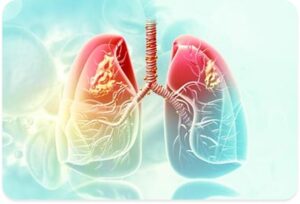
Peripheral lung tumor
- The most common form.
- Often seen in current or former smokers, but it also occurs in young people, women, and even people who have never smoked.
- Usually begins in the outer regions of the lungs.
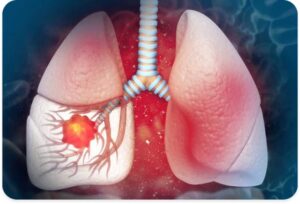
Central lung tumor
- Usually originates in the central part of the lungs.
- May cause symptoms at an early stage, unlike cancer in the peripheral regions of the lungs.
- Often metastasizes to other parts of the body because blood and lymph flow continuously through the lungs.
People who smoke have a higher risk of lung cancer than non-smokers. This risk increases with the duration and amount of tobacco smoked. If you quit smoking, even after many years, you can still significantly reduce your risk of lung cancer.
The signs and symptoms of lung cancer usually appear only when the disease has reached an advanced stage. It is one of the most common cancers in men and a leading cause of cancer-related death in men.
Risk factors
- Tobacco use and inhaling secondhand smoke (smoke exhaled by smokers) increase the risk of lung cancer.
- Poor living and working conditions increase the risk of lung cancer. This includes exposure to arsenic, chromium, diesel exhaust, silica, nickel, and other chemicals in the workplace, or toxic chemical particles that settle on household items such as curtains and furniture.
- Inhaling asbestos fibers has been shown to be directly linked to the risk of lung cancer and other respiratory diseases. Asbestos was widely used in home construction, automotive parts manufacturing, and textiles.
- Exposure to radon gas, which arises naturally from soil, rock, building materials, and household fuel combustion. Radon can accumulate indoors, especially in basements, where it often reaches its highest concentrations.
- An unhealthy diet low in foods such as carrots (rich in beta-carotene), lacking vitamin A, or drinking arsenic-contaminated water all increase the risk of lung cancer.
- A family history of lung cancer in first-degree relatives (parents, siblings, children), living with someone who has the disease, or having had radiation therapy to the chest all increase the risk.
Stages of lung cancer
Lung cancer usually does not cause obvious symptoms in its early stages, which makes early detection difficult without screening tests.
Non-small cell lung cancer has 4 main stages, as follows:
Stage 1: Cancer cells are found in the lung but have not spread to the lymph nodes or other organs.
Stage 2: Cancer cells are found in the lung and have spread to areas around the lung, such as the chest wall, the pleura, nearby lymph nodes, or the membrane surrounding the heart.
Stage 3: Cancer cells begin to spread further to other areas, specifically within the chest, between the heart and the lungs. The cancer may spread to the lower neck.
Stage 4: The cancer has spread to the other lung, the areas surrounding the lungs, or distant organs. At this stage, the cancer cells can no longer be removed by surgery.